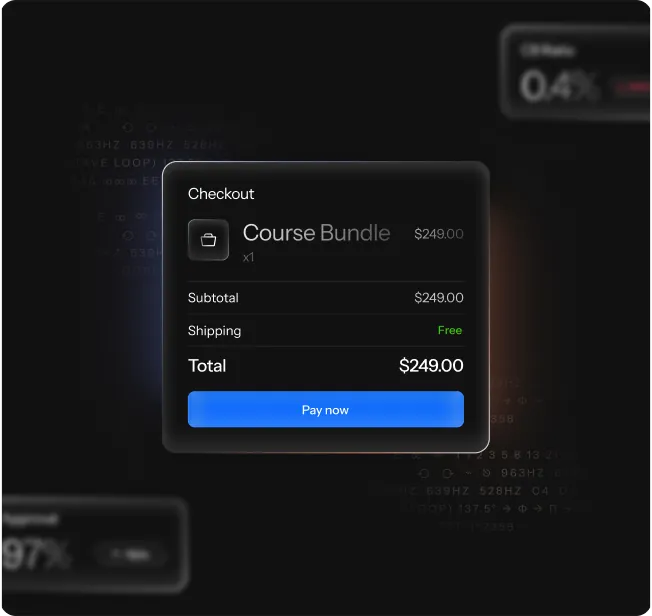
E-commerce payment processing is card-not-present by definition, so the job is twice as big: convert the checkout, and keep fraud and disputes low enough to stay in good standing. Lumino connects to Shopify and WooCommerce, adds BNPL at checkout, monitors VAMP ratios and chargebacks, and can place a store with more than one processor.
Buy now, pay later through Affirm and Klarna sits beside card payment on eligible purchases. The provider decides each approval and collects the installments, so the store is not the lender.
Subscriptions and stored cards
Subscriptions bill replenishment orders on a schedule, and a card on file lets returning customers who have given consent pay without typing their details again.
A WooCommerce brand wants a provider it can call but does not want to rebuild its site. It leaves the store as it is and changes only what sits behind checkout, using the WooCommerce integration. The team runs a test order end to end, then moves live online payments across with Lumino support on hand.
A homeware store sees more “item not received” complaints after a busy promotion. Risk & Disputes shows dispute and fraud ratios per MID and alerts the team as each case is raised. They refund where that is the right call, contest the rest with delivery records, and use reporting to find the orders behind the complaints.
A subscription box brand depends on a single account for every renewal. As volume grows it adds a second MID for its online payments, so sales can continue if one account is under review. Subscriptions keep renewals on schedule, and reporting shows both accounts in one view.
For online stores, that means checkout, pay-over-time options and dispute monitoring in one account.
A recommendation, with reasons
We look at how you sell and suggest a setup, and we say so when another option would suit you better.
Systems named on the page
The point-of-sale systems and integrations we work with are listed by name, so you know what you would be running.
Who handles the card data
Card data is handled by Lumino’s processor and gateway partners. The Trust Center explains the split.
A team you can reach
Sales and support each have a direct line on the contact page.
FAQ
E-commerce:questions,answered
Can I use a third-party payment processor with Shopify?
Shopify supports third-party payment providers, under its own terms, which can include additional transaction fees when Shopify Payments is not used. Check Shopify’s current terms for your plan, then ask us to confirm the supported connection for your setup.
What is a multi-processor strategy?
It means holding merchant accounts with more than one processor so that sales can continue if one account is reviewed, and so that transactions can be sent where they are most likely to be approved.
How does VAMP affect e-commerce merchants?
VAMP sets fraud and dispute thresholds that Visa applies to acquirers and merchants. Stores that exceed them can face remediation and fees, so monitoring ratios monthly is now part of running an online business.
Which Lumino products does an online store need?
The core is online payments behind your storefront and Risk & Disputes for monitoring. Add BNPL if buyers ask to pay over time, and subscriptions if you sell repeat orders. A second MID is worth discussing as volume grows, and larger stores can look at payment orchestration.
Can I keep my current store platform and accounting tools?
Yes, in most cases. Lumino lists Shopify, WooCommerce and WordPress among its integrations, with QuickBooks for accounting and Zapier for other tools. Which connection is available depends on your processing setup and on the platform’s own rules, so we confirm the route for your store before anything changes.
How do I get started, and what does underwriting review for a store?
You apply once and describe what you sell. For an online store, underwriting usually reviews the products, the website and its policies, how orders are fulfilled and shipped, expected volume and any processing history. Approval is the underwriter’s decision, and closely reviewed categories should expect more questions. See faster merchant onboarding.
How much does e-commerce payment processing cost?
It depends on the pricing model, your volume and your average order. Lumino’s published figures are on the pricing page and are not repeated here. Send a recent statement and a savings analysis will show how the models compare with what you pay today, including any platform fees you tell us about.
How are chargebacks handled for online orders?
Each dispute is tracked as a case with its reason and deadline, and you choose to refund, accept or contest it. For shipped goods, the useful evidence is usually the order record, the delivery confirmation and your messages with the buyer. The chargeback management guide explains the process, and chargeback protection shows how Lumino supports it.
Is dual pricing an option for an online store?
Rarely for the online side. Dual pricing is mainly used by in-person sellers, where a customer can choose to pay cash. If you also sell face to face, ask us whether dual pricing fits that part of the business. It depends on card network rules and state law, so it is set up only where permitted.
How is Lumino different from Stripe or Shopify Payments?
Lumino is sold and supported by a team that reviews your business before the first payment, and it can place a store with more than one processor. Whether that matters depends on your store. The Lumino and Stripe comparison and the guide to Shopify Payments alternatives set out how to decide.